

When investing in real estate, one question matters more than almost any other:
Will this property increase in value over time?
While no investment comes with guaranteed returns, certain factors can significantly improve a property’s chances of appreciating in the future.
Successful real estate investors don’t just buy properties based on current prices. They look for indicators that suggest an area is poised for growth, development, and increasing demand.
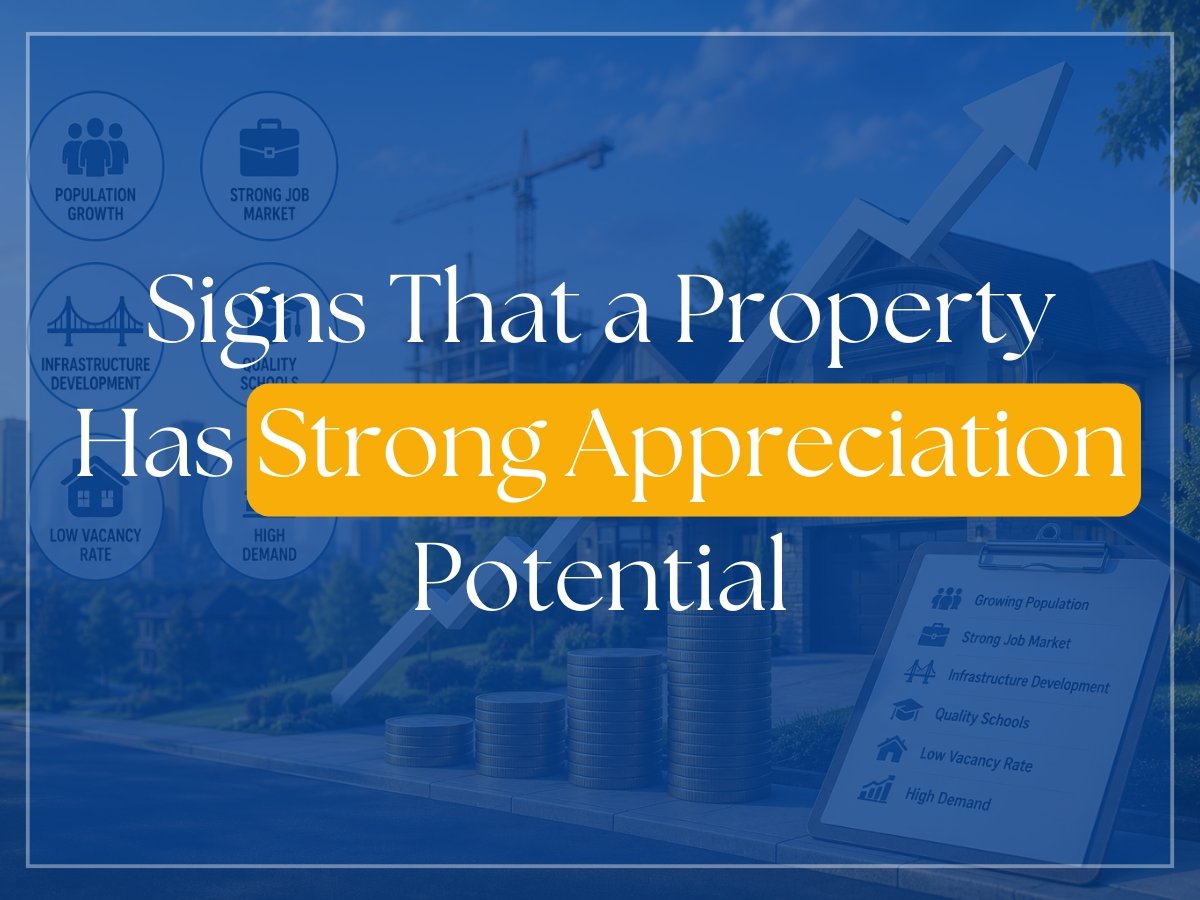
If you’re planning to purchase a property for long-term wealth creation, here are some key signs that indicate strong appreciation potential.
1. Upcoming Infrastructure Development
Infrastructure is often one of the biggest drivers of property appreciation.
Projects such as:
- Metro rail networks
- New highways and expressways
- Airports
- Railway stations
- Flyovers and road expansions
can transform an area’s accessibility and attractiveness.
As connectivity improves, more people and businesses move into the region, increasing demand for residential and commercial properties.
Properties located near major infrastructure projects often experience significant value growth over time.
What to Look For:
✔ Government-approved infrastructure projects
✔ Ongoing transportation developments
✔ Improved connectivity to key business hubs
2. Growing Employment Opportunities
Where jobs go, people follow.
Areas experiencing growth in industries, business parks, IT hubs, manufacturing zones, or commercial centers typically attract a larger workforce.
As population increases, demand for housing rises, which can positively impact property values.
Investors who identify emerging employment corridors early often benefit from long-term appreciation.
What to Look For:
✔ New corporate offices
✔ Business districts under development
✔ Industrial and technology parks
✔ Expanding commercial activity
3. Increasing Demand for Housing
Strong appreciation is usually supported by strong demand.
If more people want to live in an area than there are available properties, prices naturally tend to rise over time.
Growing demand can result from:
- Population growth
- Better infrastructure
- Educational institutions
- Employment opportunities
- Lifestyle improvements
Areas that consistently attract new residents often demonstrate healthy long-term appreciation trends.
4. Presence of Quality Social Infrastructure
Modern homebuyers don’t just look for a property—they look for a complete lifestyle.
Areas with access to quality amenities tend to attract more buyers and tenants.
These include:
- Schools and colleges
- Hospitals
- Shopping centers
- Entertainment zones
- Parks and recreational spaces
The more convenient and livable a location becomes, the more attractive it is to future buyers.
Why It Matters
Properties located in well-developed neighborhoods often maintain stronger demand and better resale value.
5. Low Current Prices Compared to Future Potential
Some of the best investment opportunities are found in locations that are still developing.
These areas may currently offer relatively affordable property prices but have strong growth indicators for the future.
As infrastructure and commercial activity improve, property values often increase.
This strategy requires patience, but early investments in growth corridors can generate substantial returns over the long term.
Smart Investors Ask:
“What will this area look like five or ten years from now?”
6. Strong Rental Demand
Rental demand often reflects the overall attractiveness of a location.
If professionals, students, or families actively seek housing in an area, it indicates healthy market demand.
Strong rental demand can provide two benefits:
- Regular rental income
- Better long-term appreciation potential
Locations with growing employment centers and educational institutions often perform well in this regard.
7. Limited Land Availability
One of the fundamental principles of real estate is simple:
When demand increases and supply remains limited, prices tend to rise.
Areas where land is scarce or development opportunities are limited often experience stronger appreciation over time.
As available inventory decreases, competition among buyers can push property values higher.
8. Positive Market Sentiment
Sometimes the market itself provides important clues.
If reputable developers are launching projects in a particular location and homebuyers are showing increased interest, it may indicate confidence in the area’s future growth.
While trends alone should never drive an investment decision, positive market activity can be a useful signal when combined with strong fundamentals.
9. Planned Urban Development
Many cities have long-term development plans designed to improve infrastructure, transportation, and economic growth.
Areas included in these master plans often attract public and private investment.
Monitoring urban development initiatives can help investors identify locations with future appreciation potential before prices rise significantly.
Research Sources:
✔ City development plans
✔ Government infrastructure announcements
✔ Regional growth initiatives
10. Reputed Developers Investing in the Area
When established developers enter a market, it often reflects confidence in the location’s future.
Large-scale residential and commercial projects can improve the area’s overall appeal, attract more residents, and support long-term value growth.
While developer reputation should not be the only consideration, it can be an important indicator of future development activity.
Final Thoughts
Property appreciation rarely happens by chance.
The most successful real estate investments are often made in locations where multiple growth factors come together—strong infrastructure, rising demand, employment opportunities, quality amenities, and future development plans.
Rather than focusing solely on today’s property price, investors should evaluate the long-term potential of the location.
After all, in real estate, it’s not just about buying a property.
It’s about investing in the future of a location.
A well-researched property in a promising area can become more than just a real estate asset—it can become a foundation for long-term wealth creation and financial security.







Leave A Comment